How to Design a Complete Outdoor Living Space in North Texas: The Fort Worth Homeowner’s Planning Guide
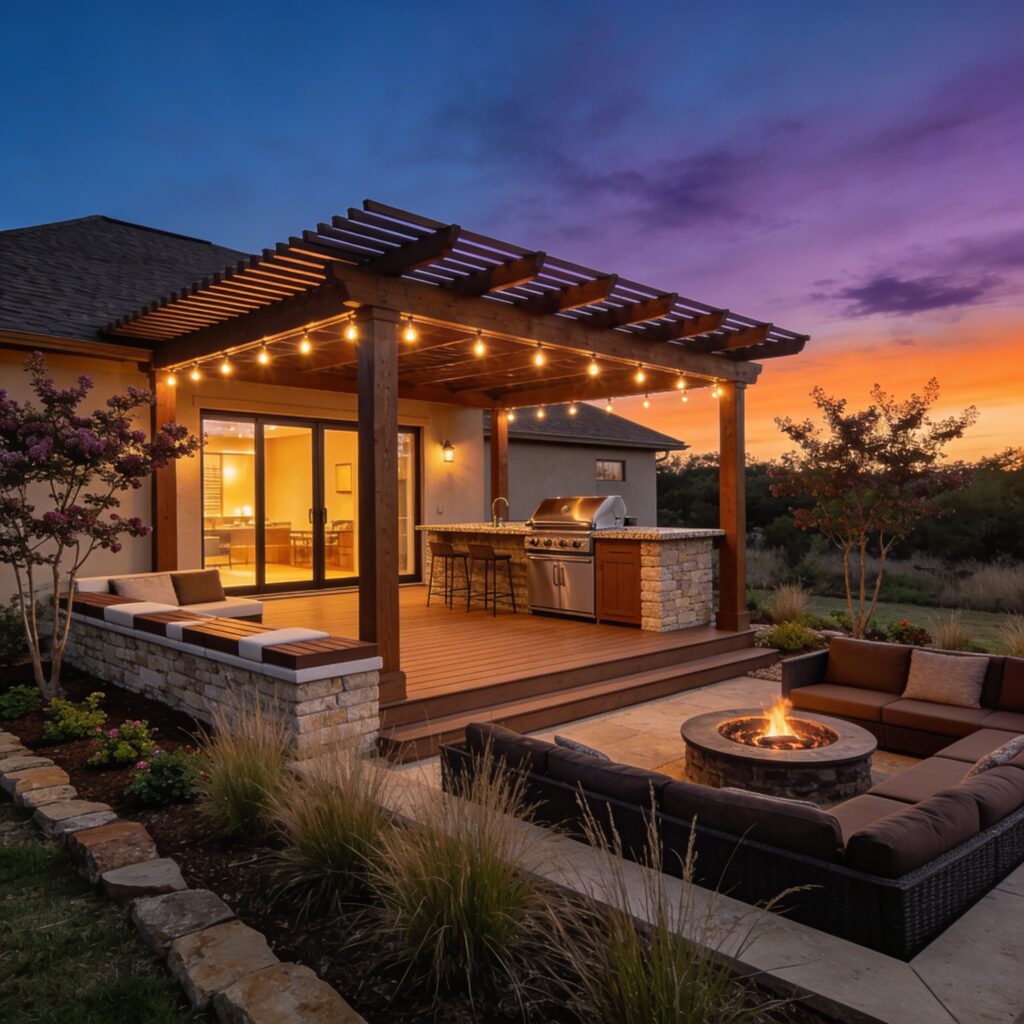
Every great outdoor living space in North Texas starts the same way: someone stands in their backyard on a perfect April evening, looks at the unused concrete slab and the builder-grade patio cover, and thinks — “There has to be more than this.” There is. But going from that moment of inspiration to a backyard that genuinely functions as an additional room — one your family uses constantly, one that entertains 30 people on a Saturday night as easily as it hosts a quiet weeknight dinner — requires a planning process that most homeowners skip entirely. They see a pergola they love on Pinterest. They call a contractor. They get a deck built. Then they realize the deck faces west and bakes in the afternoon sun. The pergola is beautiful but has no electrical for fans or lighting. There’s no kitchen so someone’s always going back inside. The patio furniture is lovely but there’s nowhere to put it when the weather turns. This guide gives you the complete outdoor living planning framework — from orientation and zoning to materials and integration — so your outdoor space works the way you imagined it from day one. Why Outdoor Living Matters More in North Texas Than Almost Anywhere Else North Texans have a complicated relationship with their outdoor spaces. The climate offers genuinely spectacular weather — cool, clear winters, vibrant springs, warm fall evenings — but punishing summers that can make unshaded outdoor spaces unusable from June through September. The homeowners who crack this code — who design outdoor spaces that are comfortable and functional from March through November — add a room to their home without adding to its footprint. They entertain more, spend more time outside as a family, and almost universally report that their outdoor living space is one of the best investments they’ve ever made in their home. The ones who don’t crack it end up with beautiful-looking spaces they don’t actually use. The difference is almost entirely in the planning. Step 1: Define How You Want to Live Outside Before you choose a material, draw a layout, or talk to a contractor, spend time answering these questions honestly: How do you actually spend time outside right now? Morning coffee? Evening dining? Weekend entertaining? Active kids’ play? Knowing this shapes every design decision. Who uses the space? A couple with no children has very different needs than a family with three kids and a dog. Multi-generational households need to design for different levels of mobility and different preferences simultaneously. How many people do you realistically entertain at once? The answer to this drives space planning more than almost any other factor. Designing for a party of 10 is very different from designing for a party of 40. What’s your relationship with cooking outside? A full outdoor kitchen is a major investment — deeply worthwhile for families who love outdoor cooking and entertaining, significantly less so for families who prefer to cook inside and eat outside. How much maintenance are you willing to commit to? An outdoor space with a wood pergola, real wood decking, a plaster outdoor kitchen, and natural stone requires significantly more maintenance than one built with composite decking, aluminum structure, and sealed concrete. Be honest with yourself before you specify materials. What’s your real budget — not your aspirational budget? A fully appointed outdoor living space in North Texas — pergola, deck, outdoor kitchen, fire feature, landscaping, and lighting — can run anywhere from $40,000 to $200,000+. Know what you’re working with before you start designing. Step 2: Understand Your Yard’s Constraints and Opportunities Great outdoor living design starts with the site, not the Pinterest board. Here’s how to read your yard: Sun orientation. As we covered in our custom pergola design guide for Fort Worth homeowners, sun orientation is one of the most critical and most overlooked factors in outdoor living design. In North Texas (roughly 32–33 degrees north latitude), the afternoon sun comes from the southwest and west — which means west-facing outdoor spaces bake from noon through sunset in the summer. East-facing spaces get morning sun and afternoon shade. South-facing spaces get the most overhead sun in summer but the most winter warmth. Know your orientation before you design. Existing structures and transitions. How does the outdoor space connect to the house? Where are the doors? What are the sight lines from inside? The best outdoor spaces feel like a natural extension of the interior — which requires designing the transition intentionally. A sliding glass door that exits onto a deck in full afternoon sun is a transition you’ll avoid. A covered transition that steps down naturally to an outdoor kitchen and seating area is one you’ll use constantly. Utility locations. Know where your gas, electrical, water, and sewer connections are before you plan outdoor kitchen or plumbing locations. Running a gas line across 40 feet of yard is straightforward; running it under a finished deck after the fact is not. Drainage. North Texas gets intense rainfall events. Your outdoor living space should be designed so water drains away from the house, not toward it. Grade, drainage channels, and permeable paving options all need to be considered during design. Privacy. What do you see — and what sees you — from your outdoor space? Neighbors, streets, and adjacent properties all affect how comfortable and usable a space feels. Privacy screening through landscaping, fencing, or structural elements should be designed in, not added as an afterthought. Step 3: Zone Your Outdoor Space Like a Room The biggest design error in outdoor living is treating the backyard as one undifferentiated zone. The best outdoor living spaces are organized into distinct zones — just like the rooms of your house — each with a specific function: The Dining Zone This is where people gather to eat. It needs a flat, level surface (deck, patio, or concrete), proximity to the outdoor kitchen or easy access to the indoor kitchen, adequate shade during the times you’ll