Your home’s exterior does more work than any other surface on the property. In North Texas, that means surviving 100-degree summers, UV radiation intense enough to fade paint in a single season, hailstorms that can demolish a wood deck overnight, and humidity swings that make lesser materials crack, warp, and rot. Choosing the wrong exterior cladding is one of the most expensive mistakes a Fort Worth-area homeowner can make — because you’ll be living with that decision for 20 to 40 years.
This guide gives you an honest, side-by-side comparison of the most common exterior cladding options available in North Texas — vinyl siding, fiber cement, LP SmartSide, and metal — so you can make a confident, informed decision before you spend a dollar on installation.
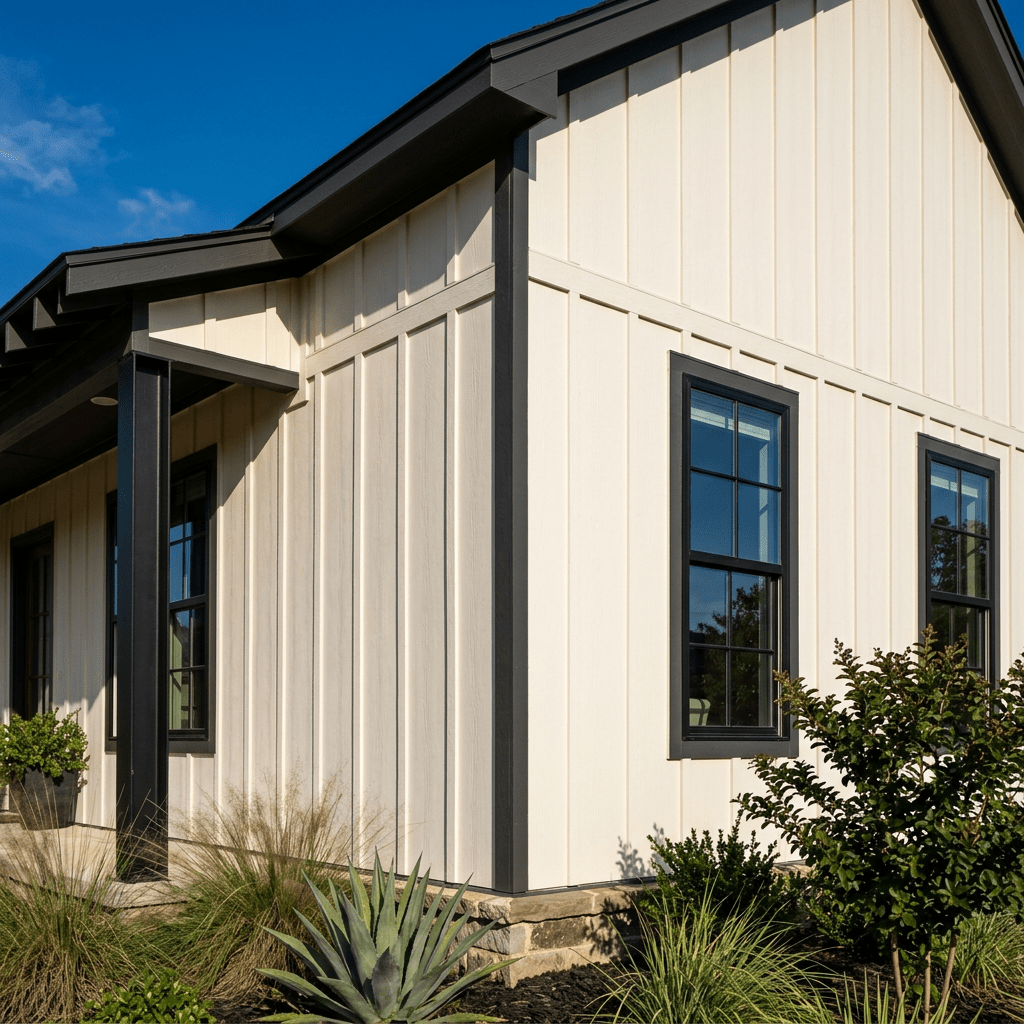
Why Your Exterior Cladding Choice Matters More in North Texas Than Almost Anywhere Else
North Texas is genuinely one of the harshest environments in the country for exterior building materials. Here’s what your cladding has to survive:
UV intensity. The Fort Worth area averages more than 230 sunny days per year. Ultraviolet radiation breaks down pigments, oxidizes surfaces, and degrades materials at a rate that homeowners in northern climates rarely experience.
Thermal cycling. North Texas routinely swings from single-digit temperatures in a January ice storm to 108 degrees in August. That 100-degree swing expands and contracts exterior materials repeatedly — stressing seams, fasteners, and coatings year after year.
Hail. Tarrant County sits in the heart of Hail Alley. Golf ball-sized hail that would make national news elsewhere is an almost annual occurrence here. Impact resistance is a real performance specification, not a marketing term.
Moisture and humidity. While North Texas is semi-arid overall, spring storm seasons bring intense rainfall. The cycle of wet and dry — particularly with the region’s clay soils — creates conditions that accelerate rot in wood-based materials.
Wind. The Fort Worth area regularly sees straight-line winds of 50–70 mph during storm events. Cladding systems that aren’t properly fastened and rated for wind loads can fail catastrophically.
Option 1: Vinyl Siding
Vinyl siding is the most widely installed exterior cladding in the United States, and it’s common throughout the Fort Worth area — particularly on production homes built in the 1980s through 2000s.
How Vinyl Siding Works
Vinyl siding is manufactured from PVC (polyvinyl chloride) and formed into horizontal or vertical panels that interlock and are nailed to the home’s sheathing. The color is integral to the material — it runs through the full thickness of the panel — which means minor scratches don’t expose a different substrate below.
Pros of Vinyl Siding in North Texas
Cost. Vinyl is the most affordable cladding option by a significant margin. Installed costs in the Fort Worth area typically run $4–$8 per square foot, making it accessible for homeowners with budget constraints.
Low maintenance. Vinyl doesn’t require painting. Cleaning with a garden hose or pressure washer once or twice a year is all most homeowners ever do to maintain it.
Moisture resistance. Vinyl doesn’t absorb water, doesn’t rot, and isn’t susceptible to termite or pest damage — meaningful advantages in a region with active termite pressure.
Wide style selection. Modern vinyl siding is available in dozens of profiles (Dutch lap, beaded, board-and-batten, shakes) and hundreds of colors. Premium vinyl siding products convincingly mimic wood grain texture.
Cons of Vinyl Siding in North Texas
Hail vulnerability. Standard vinyl siding is susceptible to hail damage. A significant hail event can crack, dent, or shatter panels — and matching replacement panels to aged, sun-faded existing siding is notoriously difficult. Impact-resistant vinyl products exist but cost significantly more.
Thermal expansion. Vinyl expands and contracts significantly with temperature changes. In North Texas’s extreme thermal range, improperly installed vinyl siding can buckle, warp, or pull away from the structure. Installation quality is critical.
Heat absorption. Dark-colored vinyl siding in direct afternoon sun can reach surface temperatures of 160–180°F in North Texas summers, which can cause softening and distortion. Lighter colors significantly mitigate this.
Perceived quality ceiling. In the higher-end North Texas custom home market, vinyl siding is often seen as a limiting factor on resale appeal. Buyers comparing custom homes at the $500,000+ price point increasingly expect fiber cement or engineered wood.
Typical lifespan in North Texas: 20–30 years with quality installation.
Option 2: Fiber Cement Siding (James Hardie and Competitors)
Fiber cement siding — most commonly associated with the James Hardie brand — has become the dominant premium cladding choice in the Fort Worth area over the past 15 years, and for good reason.
How Fiber Cement Works
Fiber cement is manufactured from a composite of Portland cement, sand, and cellulose fibers. It’s formed into boards, panels, or shingles that are primed and factory-painted (or field-painted after installation). The result is a material that looks remarkably like wood but has the durability of a cement-based product.
Pros of Fiber Cement in North Texas
Impact resistance. Fiber cement handles hail significantly better than vinyl. It doesn’t crack or shatter under impact loads that would destroy vinyl panels — a meaningful advantage in Tarrant County.
Fire resistance. Cement doesn’t burn. Fiber cement siding is non-combustible, which can reduce homeowner’s insurance premiums and provides genuine protection in fire events.
Dimensional stability. Fiber cement expands and contracts much less than vinyl with temperature changes — important in North Texas’s extreme thermal range.
Aesthetics and curb appeal. Factory-primed and painted fiber cement products achieve a painted-wood look that vinyl can’t fully replicate. At the higher end of the custom home market, fiber cement is the standard expectation.
Paint longevity. Quality fiber cement paint systems carry 15-year finish warranties. The surface accepts paint exceptionally well for future repaints.
Cons of Fiber Cement in North Texas
Cost. Fiber cement installed in Fort Worth typically runs $8–$14 per square foot — roughly double vinyl’s cost.
Weight. Fiber cement is heavy — roughly 2.5 pounds per square foot. This is a structural and logistics consideration for installation crews.
Moisture management at cut edges. Fiber cement must be properly sealed at all cut edges during installation. Improperly sealed cuts allow moisture infiltration that can swell and degrade the material over time. This is an installation quality issue more than a material flaw — but it means choosing an experienced installer matters.
Paint maintenance. Unlike vinyl, fiber cement will eventually need repainting — typically every 12–17 years depending on finish, color, and exposure.
Typical lifespan in North Texas: 30–50 years with proper installation and maintenance.
Option 3: LP SmartSide (Engineered Wood Siding)
LP SmartSide is an engineered wood siding product manufactured by Louisiana-Pacific that has grown significantly in market share in North Texas over the past decade. It occupies a middle ground between vinyl and fiber cement — both in cost and performance.
How LP SmartSide Works
LP SmartSide is manufactured from wood strands bonded with a resin binder and treated with zinc borate for pest and fungal resistance. The surface is overlaid with a resin-saturated paper and factory-primed. It has a genuine wood appearance and accepts paint just like real wood.
Pros of LP SmartSide in North Texas
Natural wood appearance. LP SmartSide achieves a wood grain texture that neither vinyl nor fiber cement can fully match. For homeowners who want the look of painted wood without the maintenance of real wood, it’s the closest approximation.
Impact resistance. LP SmartSide carries Class 4 impact resistance ratings on many products — the highest available — which can qualify homeowners for hail-resistant insurance discounts in Texas.
Weight. Significantly lighter than fiber cement, making installation faster and less demanding on the structure.
Cost. Installed costs typically run $6–$11 per square foot — less expensive than fiber cement but more than standard vinyl.
Workability. Engineered wood cuts and installs with standard carpentry tools, making trim details, corners, and custom profiles more accessible than with fiber cement.
Cons of LP SmartSide in North Texas
Moisture sensitivity at edges. Like fiber cement, proper sealing at all cut edges and penetrations is critical. LP SmartSide’s engineered wood core is more moisture-sensitive than cement-based products if installation details are ignored.
Paint maintenance. LP SmartSide requires repainting — typically every 10–15 years depending on exposure and finish quality.
Track record. LP SmartSide has an excellent current track record, but it’s a younger product than fiber cement. Long-term performance data (50+ years) doesn’t yet exist the way it does for fiber cement and vinyl.
Typical lifespan in North Texas: 25–40 years with proper installation and maintenance.
Option 4: Metal Siding
Metal exterior siding — typically steel or aluminum panels — is increasingly popular in North Texas, particularly on barndominium-style homes, modern farmhouse designs, and commercial-residential hybrid structures.
Pros of Metal Siding in North Texas
Extreme durability. Properly coated metal siding is virtually impervious to rot, pests, fire, and impact. It’s the most durable cladding option available.
Hail resistance. Quality steel siding products with appropriate gauge and coating handle hail better than any other residential cladding.
Longevity. A quality metal siding system installed correctly in North Texas can last 40–70+ years with minimal maintenance.
Design direction. Metal siding — particularly standing seam or board-and-batten profiles — aligns beautifully with the modern farmhouse and industrial-residential aesthetics popular throughout the Fort Worth area.
Cons of Metal Siding
Cost. Metal siding systems typically run $10–$20+ per square foot installed, making them one of the more expensive options.
Denting. While steel handles hail better than vinyl, it can dent under severe impact — and dents are difficult or impossible to repair without panel replacement.
Thermal conductivity. Metal conducts heat and cold. Proper insulation behind metal panels is essential for energy efficiency — a consideration that adds complexity and cost to the installation.
Aesthetic limitations. Metal siding reads as distinctly modern or industrial. It doesn’t suit all architectural styles, and in HOA neighborhoods, it may face deed restriction challenges.
Side-by-Side Comparison: Which Cladding Is Right for Your North Texas Home?
| Factor | Vinyl | Fiber Cement | LP SmartSide | Metal |
|---|---|---|---|---|
| Installed Cost (per sq ft) | $4–$8 | $8–$14 | $6–$11 | $10–$20+ |
| Lifespan | 20–30 yrs | 30–50 yrs | 25–40 yrs | 40–70+ yrs |
| Hail Resistance | Low–Medium | Medium–High | High | High |
| Maintenance | Minimal | Low (repainting) | Low (repainting) | Minimal |
| Fire Resistance | Low | High | Medium | High |
| Wood Appearance | Moderate | Good | Excellent | Low |
| Resale Appeal | Budget–Mid | Mid–Premium | Mid–Premium | Niche–Premium |
| Best For | Budget builds | Custom homes | Farmhouse/mid | Barndos/modern |
Windows and Doors: The Other Half of Your Exterior Envelope
Cladding doesn’t perform in isolation — it works as part of a complete exterior system that includes windows, doors, trim, and flashing. Even the best fiber cement siding will fail prematurely if it’s paired with improperly flashed window installations that allow water infiltration at the most vulnerable points of the exterior wall.
This is why we approach exterior projects as a complete system rather than individual components. If you’re replacing siding on a Fort Worth-area home, it’s also worth evaluating your windows and doors at the same time — the labor savings of doing both together are significant, and new energy-efficient windows dramatically improve comfort and utility costs. Our guide on choosing the right windows and doors for your North Texas home covers what to look for in detail.
Why Installation Quality Matters as Much as Material Selection
Here’s the honest truth that most siding manufacturer marketing glosses over: the best material in the world will fail if it’s installed incorrectly. In North Texas, where moisture, thermal cycling, and hail all stress exterior systems simultaneously, installation quality is the variable that separates siding that performs for 40 years from siding that starts failing in 10.
The critical installation details that separate quality work from shortcuts:
Proper moisture barrier installation. The housewrap or building paper behind the siding must be installed correctly — lapped in the right direction, taped at seams, and integrated properly with window and door flashing. This is invisible after installation is complete, which is why some contractors cut corners here.
Correct fastening. Every cladding product has specific fastener type, length, and spacing requirements. Over-driven fasteners crack vinyl and fiber cement. Under-driven fasteners allow panels to shift and loosen. The specifications exist for good reason.
Proper edge sealing. Fiber cement and LP SmartSide must be sealed at every cut edge — every butt joint, window cutout, and trim intersection. Unsealed edges are moisture entry points.
Trim and corner detailing. The corners, window surrounds, and horizontal trim transitions of a siding installation are where craftsmanship shows most clearly. These details also carry the highest moisture risk if done poorly.
At Lawrence Construction Services, we treat every exterior project with the full system approach — siding, trim, flashing, and caulking worked together as a complete weather barrier. You can see examples of our exterior work in the project gallery, and our outdoor living spaces and exterior service page outlines what a complete exterior project with us looks like.
Ready to upgrade your home’s exterior? Contact Lawrence Construction Services for a free consultation — we serve Fort Worth, Azle, and the surrounding Tarrant County area.
8 Frequently Asked Questions About Siding in North Texas
What is the best siding for North Texas homes?
For most North Texas homeowners, fiber cement siding — particularly James Hardie products — offers the best overall combination of durability, aesthetics, hail resistance, and resale value. LP SmartSide is an excellent alternative for homeowners who prioritize a natural wood appearance and Class 4 impact resistance at a slightly lower cost than fiber cement. Vinyl remains a practical choice for budget-conscious projects. Metal siding excels on barndominium-style and modern farmhouse designs. The best choice depends on your home’s architectural style, your budget, and how long you plan to own the property.
How much does it cost to reside a house in Fort Worth, TX?
Residing a typical 2,000 square foot home in Fort Worth costs between $12,000 and $35,000 depending on material selection, story count, and complexity of the exterior. Vinyl siding at the lower end runs $10,000–$18,000 installed. Fiber cement siding for the same home typically runs $18,000–$30,000. These estimates include removal of old siding, installation of new moisture barrier, installation of new cladding and trim, and caulking and sealing. Homes with multiple stories, complex rooflines, or significant trim detail cost more.
Does vinyl siding hold up to hail in North Texas?
Standard vinyl siding is one of the more hail-vulnerable exterior materials in the North Texas market. A significant hailstorm — which Tarrant County experiences regularly — can crack, shatter, or heavily dent standard vinyl panels. Impact-resistant vinyl siding products, rated Class 3 or Class 4 for impact resistance, perform significantly better and may qualify homeowners for insurance discounts. If you’re installing new siding in the Fort Worth area, specifying an impact-resistant product is strongly advisable regardless of material type.
How long does siding last in Texas?
Lifespan varies by material and installation quality. Vinyl siding in North Texas typically lasts 20–30 years before UV degradation, fading, and brittleness require replacement. Fiber cement siding lasts 30–50 years with periodic repainting. LP SmartSide lasts 25–40 years with maintenance. Metal siding systems can last 40–70+ years. All of these estimates assume quality installation with proper moisture management details. Poor installation can cut the effective lifespan of any material in half.
Does new siding increase home value in Texas?
Yes — new siding is one of the higher-ROI exterior investments for North Texas homeowners. Industry studies consistently show siding replacement returns 70–85% of its cost in added home value at resale, and the curb appeal impact tends to shorten time-on-market. In the Fort Worth and Tarrant County market, where buyers place high value on well-maintained exteriors, replacing deteriorated, faded, or hail-damaged siding before listing can meaningfully improve both sale price and sale speed.
Can I install new siding over my existing siding in Texas?
Technically yes — installing new siding over existing siding is possible in some situations. However, it is generally not recommended by experienced contractors for several reasons. Installing over existing siding hides potential moisture damage, rot, or pest activity that should be addressed before re-cladding. It can also void manufacturer warranties, create thickness buildup at windows and doors that requires additional trim work, and add unnecessary weight to the structure. In most cases, removing the existing siding and starting fresh with a proper moisture barrier produces better results and a longer-lasting installation.
What color siding holds up best in North Texas sun?
Lighter colors perform significantly better in North Texas UV conditions than dark colors for most siding materials. Dark vinyl siding absorbs substantially more heat, which accelerates thermal expansion and can cause surface distortion in extreme temperatures. Dark fiber cement and LP SmartSide fade more noticeably over time than lighter tones. If you prefer a darker color, fiber cement with a quality factory-applied finish (like James Hardie’s ColorPlus technology) performs better than field-painted products because the finish is applied under controlled conditions with baked-on durability. Metal siding with PVDF (Kynar) coatings retains color best of all, even in dark tones, over decades of UV exposure.
Do I need permits to replace siding in Fort Worth?
In most Fort Worth-area municipalities, replacing like-for-like siding on an existing home does not require a building permit. However, if the siding replacement involves structural repairs, changes to the exterior envelope that affect energy code compliance, or work in certain historic districts, permits may be required. Any window or door replacements done in conjunction with the siding project will require separate permits. Your contractor should advise on permit requirements for your specific project — and any contractor who tells you to skip permits to save time is a contractor worth avoiding.
Lawrence Construction Services provides exterior siding installation and replacement throughout Fort Worth, Azle, and the surrounding Tarrant County area. We serve the full 30-mile North Texas radius from our Azle office. Call (817) 612-7010 or contact us online to schedule a free consultation.