It starts with a question that sounds simple but has a surprisingly nuanced answer: “Should we do a pergola or a covered patio?”
In almost every outdoor living consultation we have with Fort Worth-area homeowners, this decision comes up early. And the honest answer is that both structures serve real purposes – but they are not interchangeable. Choosing the wrong one for your specific yard, your lifestyle, and your use patterns will leave you either baking in the afternoon Texas sun or feeling like you are eating dinner under a parking garage roof.
This guide breaks down the real differences between a solid patio cover and an open pergola, walks through the cost and permit landscape for the North Texas market, and helps you figure out which structure – or which combination of both – is actually right for your backyard.
What Is a Covered Patio?
A covered patio, also called a patio cover, shade structure, or attached patio roof, is a solid-roofed structure that provides complete protection from both sun and rain. The roof can be built from several materials:
Solid wood or steel framing with roofing material that matches or complements the home’s existing roof. This is the most architecturally integrated option – the patio cover looks like a natural extension of the home’s roofline rather than an add-on.
Insulated aluminum panels. The most popular choice for North Texas homeowners because the insulated core dramatically reduces heat transfer. On a 100-degree Texas afternoon, an uninsulated metal panel becomes a radiant heat source above your head. A quality insulated panel system stays significantly cooler and creates a genuinely comfortable space beneath it.
Polycarbonate panels. Semi-transparent panels that allow filtered natural light while blocking rain. These work for homeowners who want brightness without full sun exposure. In North Texas UV conditions, however, polycarbonate panels can yellow and degrade faster than aluminum systems – worth factoring into the long-term cost comparison.
What Is an Open Pergola?
A pergola is an open-frame structure: posts, beams, and rafters with no solid roof. The overhead framework intercepts some sun and creates dappled shade, but it does not block rain, and the shade level changes with the angle of the sun throughout the day.
The appeal of a pergola is aesthetic and sensory. You are under structure but still feel genuinely outdoors. The sky is visible. Breezes move freely. String lights, ceiling fans, and climbing plants all have a framework to live on. The open design creates a defined outdoor room without the sheltered, enclosed feeling of a solid cover.
Pergolas in North Texas come in several forms:
Classic open-beam pergola. Parallel rafters with maximum openness. The lowest-cost custom option.
Louvered pergola. Motorized or manual slats that open and close to control shade and rain protection. The most flexible option – and the highest cost.
Shade sail pergola. An open frame with retractable fabric canopies attached between beams. A practical middle-ground option that improves on a plain open pergola at lower cost than louvers.
How Each Structure Handles North Texas Weather
This is where most Fort Worth-area homeowners make their final decision. North Texas throws specific weather challenges at outdoor structures, and covered patios and pergolas handle each one differently.
Summer Heat
A solid insulated patio cover blocks direct solar radiation almost entirely. Standing under one in August is meaningfully more comfortable than standing under an open pergola because the insulated panel absorbs and dissipates heat rather than allowing it to radiate into the space below.
An open pergola in direct Texas sun provides partial shade – helpful, but not as dramatically cooling as a solid cover. Adding shade sails or louvered slats improves this significantly, but even a well-configured pergola shade system lets more solar radiation through than a solid insulated roof.
Rain
A solid patio cover means you can use your outdoor space during North Texas’s spring storm season. Outdoor kitchens under a solid cover stay dry. Furniture does not get soaked between uses. The space stays functional on rainy evenings.
An open pergola provides no meaningful rain protection. A louvered pergola with fully closed slats can shed moderate rainfall, but a traditional open-beam pergola in a North Texas thunderstorm is simply not usable.
Hail
A properly engineered insulated aluminum patio cover handles North Texas hail well. Standard pergola lumber holds up fine to hail. Fabric shade sails and polycarbonate panels, however, can be damaged in severe hail events – a real consideration in Tarrant County’s active hail environment.
Aesthetic Comparison: How Each Structure Feels
Beyond weather performance, these two structures create fundamentally different outdoor experiences.
A covered patio feels sheltered and defined – a genuine outdoor room with clear boundaries, a solid ceiling that gives the space proportion, and a sense of enclosure that makes furniture arrangements feel grounded. It is a great backdrop for comfortable seating, outdoor rugs, and the kind of styling that makes a backyard feel like an extension of the interior.
An open pergola feels lighter and more organic. You are aware of the sky. The structure creates overhead interest without overhead enclosure. It integrates naturally with climbing plants, string lights, and the kind of casual atmosphere that makes outdoor dining feel like an occasion.
Neither is objectively better. They create different experiences, and the right choice depends on which one aligns with how you want to feel in your outdoor space.
Cost Comparison for Fort Worth Homeowners
| Structure Type | Typical Installed Cost |
|---|---|
| Basic wood-framed attached patio cover | $12,000-$25,000 |
| Insulated aluminum patio cover (attached) | $15,000-$35,000 |
| Open cedar or pressure-treated pergola | $8,000-$20,000 |
| Composite or aluminum pergola | $15,000-$35,000 |
| Motorized louvered pergola system | $25,000-$60,000+ |
| Combination cover and open pergola | $25,000-$65,000+ |
These ranges reflect installed costs for structures of 200 to 400 square feet in the Fort Worth and Tarrant County market. Larger structures, complex rooflines, and electrical additions increase costs accordingly.
The Hybrid Approach: Why Many North Texas Homeowners Choose Both
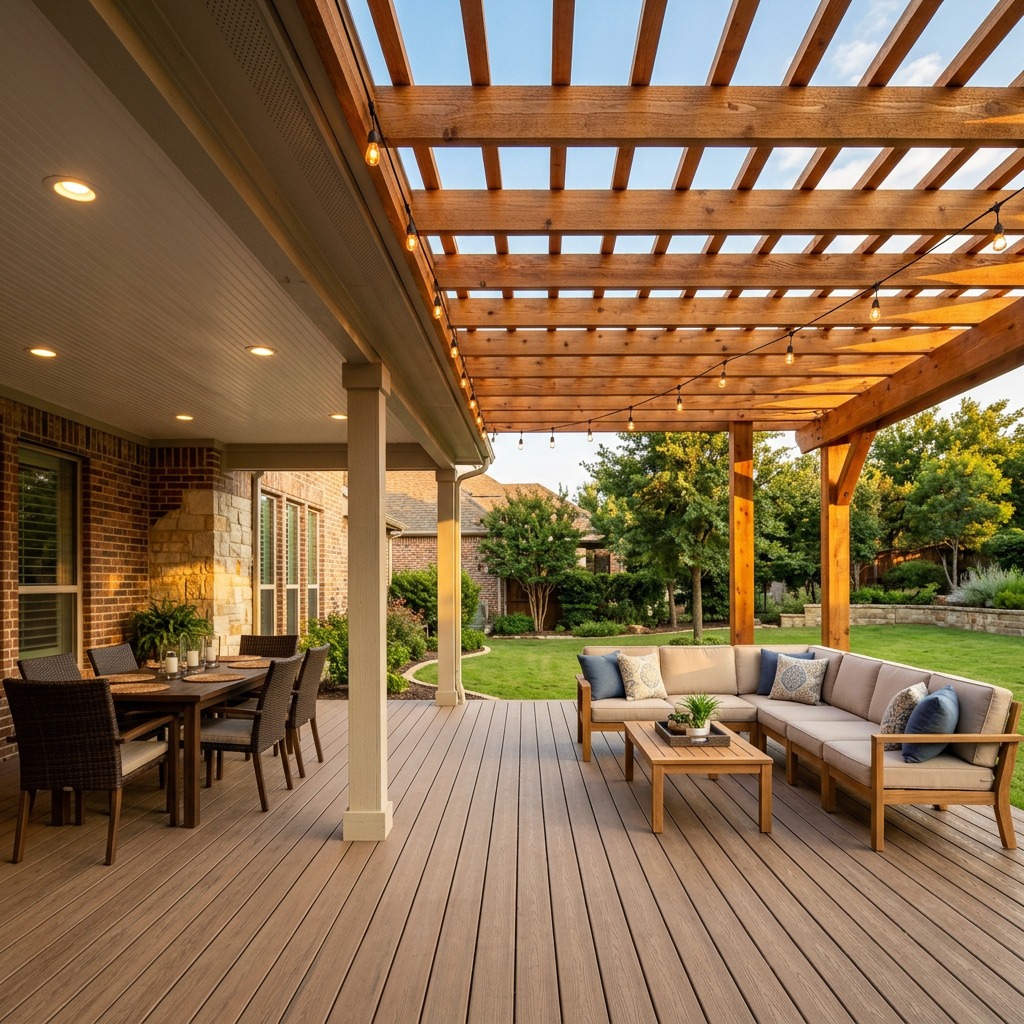
A configuration that comes up frequently in our outdoor living projects is the combination of a solid patio cover closest to the house and an open pergola frame extending further into the yard.
This works beautifully for North Texas backyards. The solid insulated cover section – typically 12 to 16 feet deep attached to the home – provides weather protection for the outdoor kitchen, dining table, and primary seating area. The open pergola beyond it creates a transition to the yard, a lighter visual counterpoint, and a framework for string lights and planters.
When the weather is perfect, both zones are usable. When it rains, the solid cover keeps the primary activity zone dry. When summer afternoon sun is intense, the insulated cover keeps the cooking and dining area comfortable while the pergola section provides partial shade further out.
This hybrid approach costs more than either structure alone – but for Fort Worth homeowners with larger yards and serious outdoor living ambitions, it is the most functionally complete configuration available.
For a full overview of our decking and pergola capabilities, visit our decks and pergolas service page. If you are pairing your structure with a new deck surface, our post on why North Texas homeowners are switching from wood to composite covers that material decision in depth. And if an outdoor kitchen is part of your vision, our guide on planning a multi-season outdoor kitchen in North Texas covers shelter requirements for cooking zones before you commit to a structure type.
Call (817) 612-7010 or contact us online to discuss your backyard project.
Permit Requirements: What Fort Worth Homeowners Need to Know
Both covered patios and pergolas require permits in most North Texas municipalities when attached to the home.
In Fort Worth: Attached patio covers and pergolas require a building permit. The permit application requires drawings showing the structure’s dimensions, attachment method, and structural details. Electrical additions require a separate permit.
In Azle: Similar requirements apply. Contact the City of Azle Building Department to verify current thresholds for freestanding structures before assuming any structure is permit-exempt.
HOA neighborhoods: Architectural review board approval is required in most planned communities before building any backyard structure. Approval timelines run 2 to 8 weeks depending on the HOA’s process – plan for this in your project schedule.
A licensed contractor pulls all required permits and coordinates all inspections. Unpermitted structures create problems at insurance claim time and at resale.
8 Frequently Asked Questions: Covered Patio vs. Pergola in North Texas
What is the difference between a covered patio and a pergola?
A covered patio has a solid roof – insulated aluminum panels, wood framing with roofing material, or polycarbonate panels – that blocks rain and direct sunlight completely. A pergola has an open overhead structure of beams and rafters that provides partial shade but no rain protection. Covered patios function as weatherproof outdoor rooms usable in most weather conditions. Pergolas create defined outdoor spaces with an open-air feel. Louvered pergola systems offer adjustable shade and partial rain protection, but at a significantly higher cost than a traditional open-beam design.
Which is better for North Texas weather: a covered patio or a pergola?
For year-round usability in the Fort Worth and Tarrant County area, a solid insulated patio cover outperforms an open pergola on weather protection. It handles North Texas spring storms, reduces summer heat transfer significantly, and creates a stable outdoor environment regardless of conditions. A pergola delivers better airflow and a more open aesthetic that many homeowners prefer on mild days. Many North Texas homeowners choose a hybrid configuration – a solid insulated cover for the primary living and cooking zone, and an open pergola frame extending further into the yard for aesthetics and additional space.
How much does a covered patio cost in Fort Worth, TX?
A solid insulated aluminum patio cover in the Fort Worth area typically costs $15,000 to $35,000 for a 200 to 400 square foot attached structure. Wood-framed patio covers with matching roofing material run $12,000 to $25,000 for a similar footprint. Costs vary based on size, roof pitch, attachment complexity, and any added features such as ceiling fans, lighting, and outdoor speakers. Electrical additions always require a separate permit and add to the total project cost.
Do I need a permit for a covered patio or pergola in Fort Worth?
Yes. Attached covered patios and pergolas require a building permit in Fort Worth and most surrounding municipalities. Freestanding structures below certain size thresholds may not require a permit in some jurisdictions, but attached structures – those connected to the home’s roofline or exterior walls – almost universally do. Electrical additions require separate permits regardless of structure type. HOA neighborhoods require architectural review board approval before any construction begins. Verify current requirements with your local building department, as thresholds can change.
Which adds more value to a home: a covered patio or a pergola?
Both add value to North Texas homes. A solid, weatherproof covered patio typically adds more measurable resale value because it creates genuinely usable outdoor space in more weather conditions. Buyers in the Fort Worth market consistently place high value on covered outdoor living, particularly when the space includes ceiling fans, lighting, and proximity to an outdoor kitchen. Pergolas add curb appeal and aesthetic interest but are viewed as a more seasonal amenity. A high-quality louvered pergola system approaches the value contribution of a solid patio cover because of its year-round functionality.
Can I attach a pergola or covered patio to any type of home?
Most homes can accommodate an attached outdoor structure, but the attachment method depends on the home’s exterior material and roofline design. Wood-frame homes with wood siding accept standard ledger board attachment most directly. Brick or stone exteriors require masonry anchors and careful flashing at the attachment point. Homes with complex hip rooflines, insufficient wall height clearance, or EIFS (exterior insulation finishing system) siding require specific engineering and waterproofing approaches. A qualified contractor assesses your home’s specific conditions before proposing an attachment method. Proper flashing at the attachment point is non-negotiable to prevent moisture intrusion.
How long does it take to build a covered patio or pergola in North Texas?
Once permits are approved, most covered patio or pergola installations in the Fort Worth area take 1 to 3 weeks of active construction depending on size and complexity. The permitting process itself runs 3 to 6 weeks before construction begins in most municipalities. A simple open pergola can be completed in 3 to 5 construction days. A covered patio with insulated panels, ceiling fans, and outdoor lighting runs 1 to 2 weeks. Full outdoor room configurations that include outdoor kitchens and custom electrical systems take 4 to 8 weeks of active construction.
Is a louvered pergola worth the extra cost in North Texas?
For homeowners who want maximum flexibility and use the space heavily year-round, yes – a motorized louvered pergola is worth the premium in the North Texas market. The ability to fully open slats for maximum airflow on mild days and close them for rain protection during storms effectively combines the benefits of both a pergola and a patio cover. The tradeoff is cost: louvered systems run $25,000 to $60,000 or more compared to $8,000 to $20,000 for a traditional open pergola. Homeowners who will use the space year-round and value weather flexibility will find the extended usable season justifies the investment. For occasional outdoor use, a simpler structure delivers better cost-to-value.
Lawrence Construction Services designs and builds covered patios, open pergolas, and complete outdoor living spaces throughout Fort Worth, Azle, and the surrounding Tarrant County area. Call (817) 612-7010 or contact us online for a free consultation.