Walk into a house and you’ll notice the countertops, the flooring, the paint color. But what makes a house feel genuinely custom — feel finished, considered, and crafted — is almost always the carpentry.
It’s the built-in bookcase that turns a dead wall into a showpiece. The coffered ceiling that makes a standard bedroom feel like a private retreat. The mudroom locker system that finally gives your family a place for everything. The wine cellar that turns an unused corner of the house into something extraordinary.
Custom carpentry is the craft that separates a well-built house from a truly exceptional home. And in North Texas, where homeowners are building and renovating at a pace that shows no signs of slowing, demand for skilled custom carpentry work has never been higher.
This guide covers what custom carpentry includes, what it costs in the Fort Worth and Azle area, and how to find a craftsman who’ll deliver work that lasts.
What Is Custom Carpentry? (And What Sets It Apart From Standard Finish Work)
Custom carpentry encompasses all the woodwork in a home that goes beyond the standard — the pieces that are designed and built specifically for a space, rather than purchased off the shelf and installed.
This is distinct from standard finish carpentry (baseboards, door casings, window stools), though a skilled custom carpenter handles that work beautifully too. What separates custom carpentry is the design element: each piece is conceived for a specific room, a specific client, and a specific purpose.
At Lawrence Construction Services, our custom carpentry work spans a wide range of projects — from wine cellars and garage conversions to built-in cabinetry, custom shelving, and architectural trim packages that transform new construction into something that feels fully finished and intentional.
Common Custom Carpentry Projects in North Texas Homes
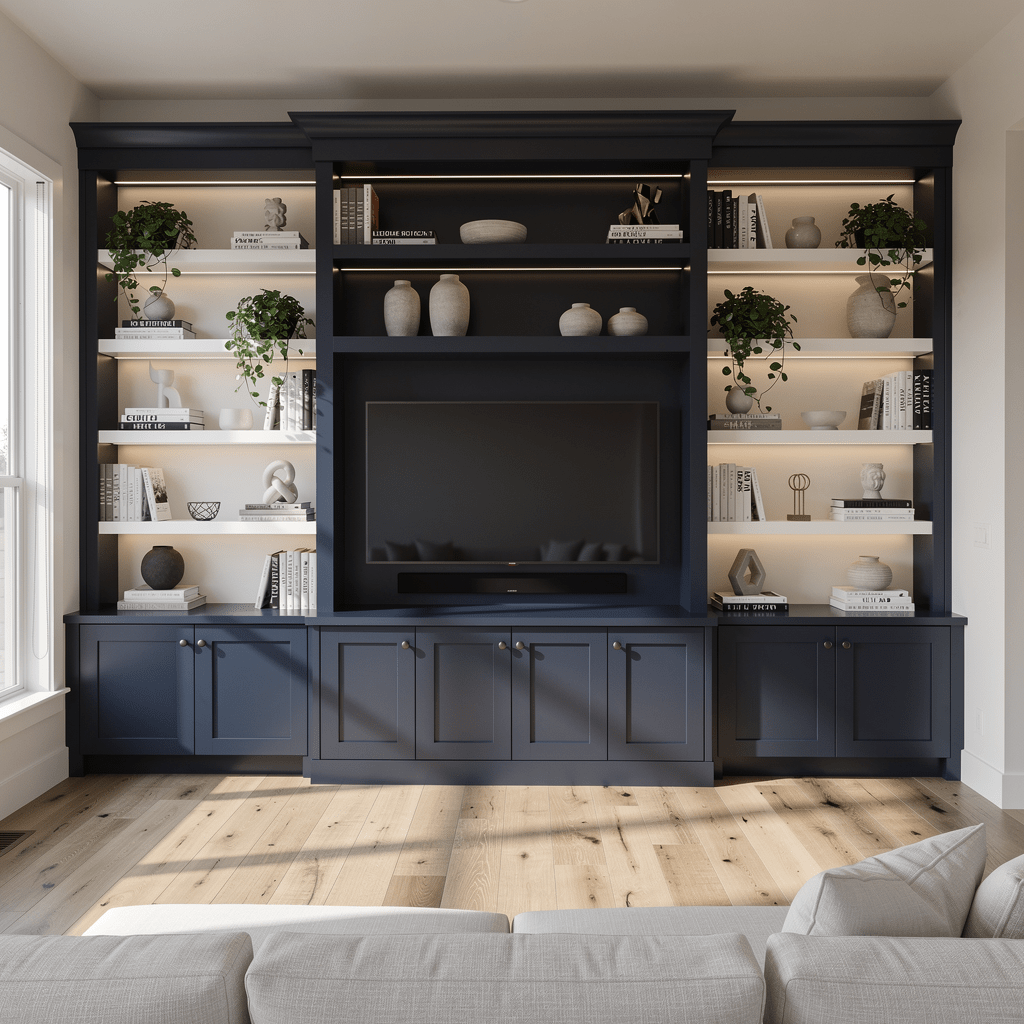
Built-in bookshelves and entertainment centers One of the most requested custom carpentry projects in the Fort Worth area — a floor-to-ceiling built-in that integrates with a room’s architecture rather than sitting against it like a piece of furniture.
Mudroom locker and storage systems Essential in Texas family homes. A properly designed mudroom system with individual lockers, bench seating, hooks, and upper cabinets solves the daily chaos of a busy household and adds genuine functional value.
Coffered and tray ceilings Architectural ceiling treatments that transform the volume of a room. Coffered ceilings use a grid of recessed panels between exposed beams. Tray ceilings step up in layers, creating depth and visual interest. Both require skilled carpentry to execute cleanly.
Wainscoting and board-and-batten Wall treatments that add texture, architectural detail, and visual weight to living rooms, dining rooms, offices, and primary bedrooms. Popular in both traditional and modern farmhouse interiors — two of the most dominant design aesthetics in North Texas.
Custom cabinetry Kitchen, bathroom, laundry, and garage cabinetry built to your exact dimensions and specifications. Unlike stock or semi-custom cabinetry, true custom cabinetry fits the space perfectly, uses your chosen wood species and finish, and is built to last decades rather than years.
Wine cellars and wet bars A growing category in Fort Worth-area custom homes. A properly designed wine cellar requires careful humidity and temperature control, specialized racking systems, and often a glass display wall or door to showcase the collection. Wet bars involve custom cabinetry, countertops, sink, refrigeration, and sometimes a back-bar mirror assembly.
Home offices and libraries As remote work has become a permanent fixture of North Texas life, investment in dedicated, beautifully finished home offices has increased significantly. Floor-to-ceiling built-in shelving, custom desks with integrated cable management, and paneled walls are all in high demand.
Garage conversions Converting a garage into finished living space — a home gym, home office, workshop, or bonus room — requires significant carpentry work: framing partition walls, installing doors and trim, building custom cabinetry or storage systems for the new use. This often intersects with ADU work.
Staircase and railing upgrades Replacing a builder-grade staircase with custom open-riser treads, a statement railing system, or box newel posts dramatically changes a home’s feel. This is one of the highest-visibility upgrades possible in a two-story home.
How Much Does Custom Carpentry Cost in Fort Worth, TX?
Custom carpentry pricing depends heavily on the complexity of the design, the wood species and materials specified, and the scope of the project. Here are realistic ranges for common projects in the North Texas market:
| Project | Typical Cost Range |
|---|---|
| Built-in bookcase / entertainment center | $3,000–$15,000+ |
| Mudroom locker system (4–6 lockers) | $4,000–$12,000 |
| Coffered ceiling (average room) | $3,500–$10,000 |
| Wainscoting / board-and-batten (per room) | $1,500–$5,000 |
| Custom kitchen cabinetry (full kitchen) | $15,000–$60,000+ |
| Wine cellar (dedicated room) | $20,000–$75,000+ |
| Home office built-ins (full room) | $5,000–$25,000 |
| Staircase and railing upgrade | $8,000–$30,000+ |
| Garage conversion (basic finish) | $15,000–$45,000 |
These ranges reflect labor and materials for installed, finished work. The high end of each range reflects complex designs, premium wood species (white oak, walnut, cherry), custom hardware, and built-in lighting or specialty features.
What Drives Custom Carpentry Costs Up?
Wood species selection. Poplar (the standard for painted built-ins) is significantly less expensive than stained hardwoods like white oak or walnut. If you’re painting, poplar is an excellent choice. If you want a natural wood grain finish, budget for premium species.
Design complexity. A simple rectangular built-in with standard shelving is far less labor-intensive than a curved built-in with decorative pilasters, crown moulding, integrated lighting, and glass-front upper cabinets.
Hardware. Cabinet hardware ranges from $3 per pull to $50+ per pull for premium European hardware. Soft-close hinges, full-extension drawer slides, and built-in electrical outlets and USB charging ports all add cost but add genuine daily-use value.
Finishing. Painted finishes require primer, sanding, multiple paint coats, and careful masking — time-intensive work. Stained and sealed finishes require careful wood preparation and multiple protective coats. The finish phase is often 20–30% of the total project labor.
The Difference Between Custom, Semi-Custom, and Stock Cabinetry
If you’re planning a kitchen renovation or new home build, understanding these three tiers will help you make the right decision for your budget and expectations:
Stock cabinetry is manufactured in fixed sizes, available at big-box retailers, and typically made of particleboard or MDF with a laminate or thermofoil finish. Cost is low; quality and fit are also low. Stock cabinets work for rental properties and budget renovations but represent a compromise in any custom home build.
Semi-custom cabinetry is manufactured in a wider range of sizes and configurations, with more finish and door style options. You can get closer to a custom fit, but you’re still working within a manufacturer’s fixed dimensions and materials. Quality varies significantly by brand.
True custom cabinetry is designed and built for your specific space by a skilled carpenter or cabinet shop. Every dimension is exact. The wood species, door style, finish, interior layout, and hardware are all your choices. A well-built custom kitchen will outlast two or three rounds of semi-custom replacements.
For most North Texas homeowners investing in a forever home or a high-quality renovation, true custom cabinetry delivers the best long-term value — particularly in kitchens and master bathrooms where quality makes a daily difference.
Custom Carpentry and Your Home’s Overall Design
The most successful custom carpentry projects don’t happen in isolation — they’re designed as part of the home’s overall aesthetic. A farmhouse-style board-and-batten accent wall reads very differently in a room with industrial light fixtures than it does with shiplap and warm Edison bulbs. A sleek, handleless flat-front built-in belongs in a contemporary interior; raised-panel cabinetry with furniture feet fits a traditional or transitional space.
This is why we approach custom carpentry as part of the complete project picture. When we’re involved in a full custom home build, the carpentry is designed alongside the floor plan, ceiling heights, and window placement — not retrofitted after the fact. When we’re working on a standalone renovation, we take time to understand the home’s existing character before proposing any new elements.
The same principle applies to outdoor transitions. When a home has a beautifully finished interior with custom built-ins and architectural millwork, the outdoor space deserves the same level of craft. A custom deck or pergola that carries the same design language as the interior creates a cohesive living environment that feels expansive and intentional — not like two separate worlds separated by a sliding glass door.
Custom Carpentry for Renovations vs. New Construction
Custom carpentry work comes in two primary contexts, and the planning process differs between them:
New Construction
In a new construction project, custom carpentry is integrated into the build schedule. Built-ins and cabinetry are typically installed during the interior finish phase, after drywall and before final paint. Architectural ceiling treatments go in during framing and rough drywall. This sequencing is critical — built-ins designed before drywall can be wired for integrated lighting, outlets, and media connections in the rough-in phase, rather than retrofitted later at greater cost.
If you’re planning a custom home in the Fort Worth area and want to include custom carpentry elements, the conversation should start during the design phase — not after you’ve already built the shell. Read our full guide on building a custom home in North Texas for the complete process overview.
Renovation and Retrofit
Adding custom carpentry to an existing home requires a different approach. Existing walls, ceilings, and floors are rarely perfectly level, square, or plumb — skilled custom carpenters account for this and scribe their work to fit real-world conditions. Electrical and lighting additions require coordination with a licensed electrician. In older homes, lead paint and asbestos testing may be required before certain demolition or modification work.
The renovation context also means the carpenter needs to work within your occupied home — protecting your belongings, managing dust and debris, and completing work in sections that minimize disruption to daily life.
Choosing a Custom Carpentry Contractor in the Fort Worth Area
Custom carpentry is a specialty trade, and the range of skill and experience among contractors calling themselves “carpenters” in North Texas is enormous. Here’s how to find the right one:
Ask to see completed work in person. Photos are easy to manipulate and cherry-pick. Visiting a completed project — or at minimum, getting references from clients who had similar work done — gives you a real-world sense of the carpenter’s standards and precision.
Look for evidence of design thinking, not just execution. The best custom carpenters don’t just build what they’re told — they contribute to the design process. They’ll suggest proportions that look right, flag details that will create problems later, and bring a point of view about how the piece should relate to the room.
Understand what’s included in the quote. Does the quote include paint or stain? Hardware? Electrical rough-in coordination? Demolition of existing features? Clarify scope before you compare bids.
Ask about lead times. Quality custom carpenters in North Texas are often scheduled 6–12 weeks out. If someone can start next week, ask yourself why their schedule is so open.
Verify licensing and insurance. All tradespeople working in your home should carry general liability insurance and, if they have employees, workers’ compensation coverage. Ask for certificates of insurance before work begins.
Ready to talk about your project? Contact Lawrence Construction Services for a consultation on custom carpentry, built-ins, or a complete home renovation in the Fort Worth and Azle area. We serve all of Tarrant County and the surrounding North Texas region.
8 Frequently Asked Questions About Custom Carpentry in Fort Worth
How much do custom built-ins cost in Fort Worth, TX?
Custom built-in bookshelves, entertainment centers, and storage systems in the Fort Worth area typically cost between $3,000 and $15,000+, depending on size, complexity, and finish. A simple painted built-in bookcase for a home office runs $3,000–$6,000. A full wall entertainment center with integrated media storage, lighting, and glass-front display cabinets can reach $10,000–$18,000 or more. Custom cabinetry in painted poplar is generally the most budget-friendly option; stained hardwood species like white oak or walnut carry a significant price premium but deliver exceptional visual results.
What is the difference between a carpenter and a general contractor?
A carpenter is a skilled tradesperson specializing in woodwork — framing, finish carpentry, cabinetry, and custom millwork. A general contractor manages a complete construction project, coordinating multiple trades (carpenters, plumbers, electricians, HVAC, etc.) and taking overall responsibility for the project outcome. For a standalone custom carpentry project like built-ins or trim work, hiring a skilled carpenter directly makes sense. For a larger renovation or new construction project where carpentry is one of many trades involved, a general contractor who also employs or works with skilled carpenters provides better overall coordination.
How long does it take to build and install custom cabinetry?
Custom cabinetry projects typically take 8 to 16 weeks from design finalization to installation — the majority of that time is shop fabrication. A full custom kitchen may take 10–14 weeks in fabrication before installation begins. Installation itself runs 1–3 weeks depending on the scope of the project. Built-ins and architectural millwork installed by on-site finish carpenters (rather than a cabinet shop) often have shorter lead times — 2–6 weeks from contract to completion for smaller projects.
Is custom cabinetry worth the cost compared to semi-custom?
For most homeowners planning a long-term home, yes — custom cabinetry is worth the premium over semi-custom. The advantages include a perfect fit for your specific space (no fillers or awkward gaps), your exact choice of wood species and finish, interior configurations designed for how you actually use the space, and significantly greater durability. Semi-custom cabinetry from reputable manufacturers occupies a reasonable middle ground, but true custom cabinetry outperforms it in fit, finish quality, and longevity. The cost premium is real but amortized over decades of daily use.
Can you add custom carpentry to an existing home, or is it only for new construction?
Custom carpentry can absolutely be added to existing homes, and renovation projects account for a significant share of custom carpentry work in the Fort Worth area. Adding built-ins, coffered ceilings, wainscoting, custom cabinetry, or architectural trim to an existing home requires working with real-world conditions — walls that may not be perfectly plumb, ceilings that may vary in height — but skilled carpenters accommodate these variations through scribing, shimming, and thoughtful design. The main additional consideration is coordinating electrical work for built-in lighting, which requires a licensed electrician.
What wood species is best for painted built-ins and cabinetry?
For painted finishes, poplar is the standard choice among custom carpenters in North Texas. Poplar is stable, takes paint exceptionally well, machines cleanly, and is significantly more affordable than hardwood species used for stained work. It’s the same species used by high-end cabinet shops for painted cabinetry because of its smooth, tight grain. For drawer boxes (which are often seen when drawers are open), maple is frequently used for its hardness and smooth face. MDF (medium-density fiberboard) is sometimes used for flat panel doors and drawer fronts in painted applications because it won’t expand and contract with humidity changes.
Do I need a permit for custom carpentry work inside my home?
Interior custom carpentry work — built-ins, cabinetry, trim, wall treatments — generally does not require a building permit in Fort Worth or surrounding municipalities. The exception is when carpentry work involves structural modifications (removing walls, altering load-bearing elements) or when it includes new electrical circuits, which always require an electrical permit. Any carpentry work involving plumbing connections (built-in wet bars, kitchen remodels) requires a plumbing permit. When in doubt, your contractor should advise on permit requirements for your specific project scope.
How do I care for and maintain custom wood cabinetry and built-ins?
Painted custom cabinetry and built-ins should be cleaned with a soft, damp cloth and a mild dish soap solution — avoid abrasive cleaners or bleach-based products that can dull the finish. Touch-up paint in your original formula should be kept on hand for inevitable nicks and dings. For stained and sealed wood, periodic application of a quality furniture polish or wax protects the finish and enhances the grain. Avoid prolonged exposure to direct sunlight, which can fade and dry out wood finishes over time. In North Texas’s humidity fluctuations, ensuring your home maintains relatively consistent humidity levels (between 35–55%) will minimize wood movement and reduce the risk of joint separation in fine carpentry work.
Lawrence Construction Services provides custom carpentry — built-ins, cabinetry, architectural millwork, wine cellars, and more — throughout Fort Worth, Azle, and the surrounding North Texas area. Call (817) 612-7010 or contact us online to discuss your project.