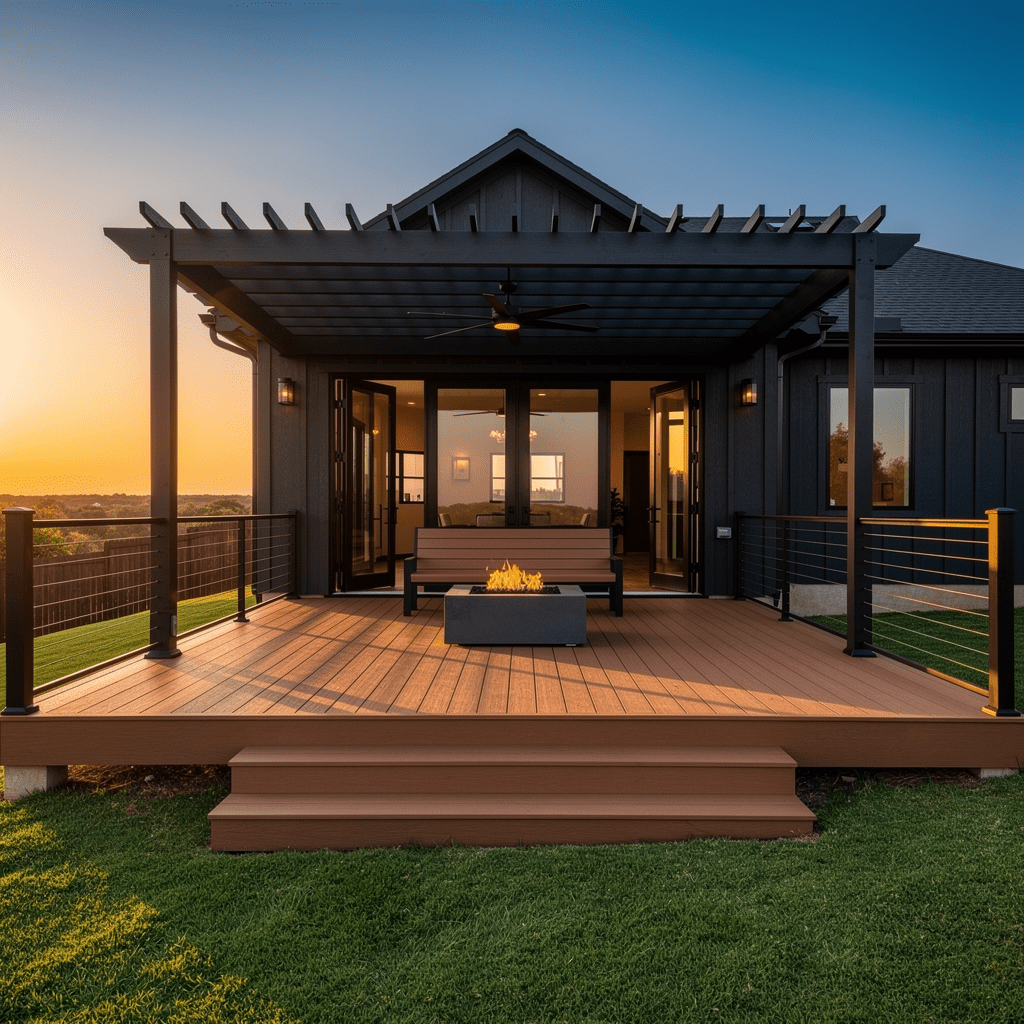
A well-built deck does something remarkable to a North Texas home: it creates a room you did not have. Not additional square footage in the technical sense – but a defined, usable, inviting space that changes how your family lives in the house. Suddenly the backyard is not something you look at through the sliding glass door. It is somewhere you actually go.
The Fort Worth area has embraced this reality. Custom deck installations are among the most consistently requested construction projects throughout Tarrant County, Parker County, and the Azle area – and for good reason. The climate offers genuinely beautiful outdoor seasons, most properties have the space for meaningful deck footprints, and North Texas homeowners understand the lifestyle value of outdoor living designed and built correctly.
But a deck is only as good as its planning, its materials, and the contractor who builds it. This guide gives Fort Worth homeowners the complete picture: costs, materials, permit requirements, design options, and how to find a deck builder worth hiring.
Why North Texas Is One of the Best Markets for Custom Decks
The weather window is larger than most people use. North Texas homeowners who say the heat makes outdoor spaces unusable are often describing spaces without shade. A well-designed deck with a pergola, shade structure, and ceiling fans is genuinely comfortable from March through May and September through November – and manageable in June and August with the right overhead coverage. That is a room usable for eight or more months of the year.
Property sizes support meaningful deck footprints. Many Fort Worth-area properties have substantial backyard square footage that is currently lawn or underutilized hardscape. A custom deck converting 400 to 800 square feet of that space into finished outdoor living delivers enormous lifestyle value relative to its construction cost.
Decks carry strong resale value. A quality custom deck consistently ranks among the top ROI home improvement investments in Texas. In a market where buyers place high value on outdoor living, a well-built, well-designed deck is a genuine selling point that photographs well, shows well, and adds directly to appraised value.
Types of Custom Decks in North Texas
Grade-level decks. Built at or close to ground level, typically a few inches above grade. The most structurally straightforward deck type, best suited to flat or gently sloping yards. Lower substructure complexity generally means lower cost per square foot.
Elevated decks. Built above ground level – ranging from 2 feet to 10 or more feet above grade – to align with a door above ground level, take advantage of a view, or accommodate sloped terrain. Elevated decks require a more substantial post-and-beam substructure, deeper concrete footings, and railings that meet current code height requirements.
Multi-level decks. Decks with two or more distinct planes connected by steps or stairs. Multi-level designs work exceptionally well for sloped North Texas yards, allow different use zones at different heights, and create visual interest that a single-plane deck cannot match.
Wraparound decks. Extending around two or more sides of the home. Common on farmhouse-style and craftsman homes throughout the Fort Worth area, wraparound decks maximize the deck’s indoor-outdoor connection and are particularly effective when the home has exterior doors or views on multiple sides.
Pool decks. Decks surrounding or adjacent to an in-ground or above-ground pool. These have specific material requirements – slip resistance is a hard requirement, not a preference – along with drainage considerations and often clearance requirements that differ from standard residential decks.
Deck Materials: Wood vs. Composite in North Texas
This is the single most consequential material decision in any deck project, and it deserves careful consideration. For an in-depth look at the full comparison, our post on why North Texas homeowners are switching from wood decks to composite covers the data in detail. Here is the summary that matters for planning purposes:
Pressure-treated wood is the most affordable decking surface material. It is structurally sound and widely available. The limitations in North Texas: it requires annual sealing or staining under intense UV exposure, it can warp and check as it cycles through the region’s extreme moisture and temperature swings, and it requires periodic inspection for rot and pest activity.
Cedar and redwood are naturally rot-resistant and beautiful when freshly installed. In North Texas UV and heat conditions, however, they require more regular maintenance than their natural durability reputation suggests. Annual treatment is necessary to prevent graying, cracking, and surface deterioration.
Composite decking – specifically premium products like TimberTech by AZEK – is what we recommend for the large majority of North Texas homeowners who want a deck that delivers year after year without significant maintenance demands. The performance advantages that matter in this climate:
- Fade and stain resistance backed by manufacturer warranty
- Surface temperatures up to 30 degrees cooler than competing composite brands
- 40% greater slip resistance than many alternatives
- 25 to 50-year product warranties depending on the specific product line
- No sealing, staining, sanding, or painting required – ever
As a certified TimberTech partner, Lawrence Construction Services supplies and installs TimberTech products at contractor pricing. You can explore the full current product line at timbertech.com – the range of colors, textures, and profiles in today’s premium composite offerings is genuinely impressive compared to what was available even five years ago.
The substructure – posts, beams, and joists – is built from pressure-treated lumber on composite deck projects. The composite surface sits on top of the PT structure.
Railing Options for Fort Worth Custom Decks
Railing is the highest-visibility element of most custom decks – it is what you see constantly from inside the house and from the yard. The right choice shapes the deck’s aesthetic as much as the decking surface itself.
Composite railing systems. Low-maintenance, coordinated with composite decking products, available in multiple colors and profiles. The most popular choice for maintenance-conscious homeowners.
Aluminum balusters with composite rails. One of the most requested configurations in North Texas custom decks. The slim aluminum balusters keep sight lines open to the yard while the composite rails eliminate painting and refinishing. Clean, contemporary, and highly durable.
Cable railing. Horizontal stainless steel cables between posts. Minimal visual profile, excellent for elevated decks with views. Cable systems require specific post spacing and periodic tension checks over time.
Glass panel railing. Frameless or semi-frameless glass panels that create minimal visual obstruction. The highest-cost railing option, but the most dramatic – particularly on elevated decks over landscapes or pools.
Pressure-treated wood balusters and rails. Traditional, most affordable, requires the same ongoing maintenance as wood decking surfaces.
Permit Requirements for Decks in Fort Worth and Tarrant County
Decks require permits in North Texas – every time, without exception worth risking. Here is the landscape:
Inside Fort Worth city limits: Decks attached to a home require a building permit. Applications require a site plan showing deck location and setbacks, structural details, and sometimes an engineering letter depending on elevation and footprint. Electrical work requires a separate permit.
In Azle: Building permits are required for decks connected to the home. Contact the City of Azle Building Department for current thresholds and setback requirements before finalizing your design.
HOA neighborhoods: Architectural review board approval is required in most planned communities before any deck installation begins. Material specifications, color selection, height, and setbacks may all be subject to HOA restrictions that can meaningfully affect your design.
Inspections: Most deck permits require a footing inspection before concrete is poured, a framing inspection before decking is installed, and a final inspection. Your contractor manages all scheduling and documentation.
Skipping permits on a deck risks code violation fines, forced removal, voided homeowner’s insurance coverage for deck-related claims, and complications at resale when the unpermitted structure surfaces during a buyer’s inspection.
What Does a Custom Deck Cost in Fort Worth, TX?
| Deck Type | Typical Installed Cost Range |
|---|---|
| Grade-level, pressure-treated wood (12×16) | $8,000-$15,000 |
| Grade-level, composite decking (12×16) | $14,000-$22,000 |
| Elevated composite deck (16×20) | $20,000-$38,000 |
| Multi-level composite deck | $28,000-$55,000 |
| Large custom composite with built-in features | $40,000-$80,000+ |
These are complete installed costs including substructure, decking surface, railing, stairs, and permit fees. They do not include overhead shade structures, outdoor kitchen integration, built-in seating, or lighting systems.
Adding a pergola or patio cover over the deck – which dramatically improves usability during North Texas summers – typically adds $10,000 to $40,000 depending on structure type and specifications.
If an outdoor kitchen is part of your planning, designing it alongside the deck allows for the most cost-efficient integration of gas lines, electrical circuits, and drainage connections. Our guide on planning an outdoor kitchen in the Fort Worth area covers that planning process in full.
How to Choose the Right Deck Builder in Fort Worth
Verify TimberTech or composite manufacturer certification. Working with a certified installer ensures proper installation procedures are followed and that manufacturer warranties remain valid. Improper fastening, incorrect spacing, and missed installation details can void composite warranties.
Ask about local permit experience. A deck builder unfamiliar with the Fort Worth, Azle, or Tarrant County permitting process will face delays and complications that an experienced local contractor avoids.
Evaluate the substructure approach. The decking surface gets all the attention, but the substructure determines whether your deck stays level and solid for 30 years. Ask specifically about joist sizing, footing depth, post base hardware, and ledger board attachment method and flashing.
Get a written scope with material specifications. The specific product line, color, profile, hardware, and fastener system should all be in writing before you sign anything.
Visit completed projects. A deck that is two to three years old tells you far more about how a builder’s work holds up than a brand-new installation or a portfolio photograph.
Our decks and pergolas service page outlines our approach to custom deck and pergola projects throughout the Fort Worth and Azle area.
Call (817) 612-7010 or start a project online – we serve the entire Fort Worth and North Texas area.
8 Frequently Asked Questions About Custom Decks in Fort Worth
How much does a custom deck cost in Fort Worth, TX?
A custom deck in the Fort Worth and Tarrant County area typically costs $14,000 to $55,000+ depending on size, material, and complexity. A basic 12×16 foot composite deck runs $14,000 to $22,000 installed. An elevated composite deck with cable railing and stairs runs $20,000 to $38,000. Multi-level custom decks with built-in features and pergola overhead can reach $60,000 to $100,000+. Pressure-treated wood decks cost 30% to 50% less upfront than composite but require ongoing maintenance that closes the lifetime cost gap significantly over 10 to 20 years of North Texas weather exposure.
What is the best decking material for North Texas?
Composite decking – specifically premium brands like TimberTech by AZEK – is the best overall choice for North Texas homeowners based on UV durability, thermal performance, maintenance requirements, and long-term value. Composite handles North Texas’s intense UV exposure, temperature extremes, and hail significantly better than natural wood. TimberTech products run cooler underfoot than competing composites, offer fade and stain resistance, and carry 25 to 50-year warranties. Pressure-treated wood is a viable budget option for homeowners willing to maintain it annually, but composite’s lower lifetime maintenance cost justifies the higher upfront investment for most Fort Worth-area homeowners.
Do I need a permit to build a deck in Fort Worth?
Yes. Decks attached to a home in Fort Worth require a building permit at minimum, plus a separate electrical permit if any wiring is included. Permit requirements include a site plan, structural details, and in some cases an engineering letter for elevated decks. HOA neighborhoods require architectural review board approval before any construction begins regardless of municipal permit requirements. Freestanding decks below a certain size threshold may not require permits in some jurisdictions, but attached decks almost universally do. A contractor who suggests skipping permits is putting your insurance coverage and your resale value at risk.
How long does it take to build a custom deck in North Texas?
Once permits are approved, a standard custom deck in North Texas takes 1 to 3 weeks of active construction. A 12×16 foot composite deck with standard railing can be completed in 5 to 7 construction days. Larger multi-level decks with integrated pergolas and outdoor kitchen rough-in run 3 to 6 weeks of active construction. The permitting process adds 3 to 6 weeks before active construction begins in most Fort Worth-area municipalities. Planning your project 2 to 3 months before your target ready date accounts for permitting time and avoids delays.
Is composite decking worth the extra cost in Texas?
Yes – for most North Texas homeowners, composite decking’s higher upfront cost is justified by its significantly lower lifetime maintenance cost and superior performance in the Texas climate. A wood deck requires annual sealing or staining, periodic sanding and board replacement as warping and checking occur, and inspection for rot and pest activity. A premium composite deck requires occasional cleaning with a garden hose and nothing more. When you calculate maintenance costs and board replacements over 20 years, composite is frequently less expensive than wood in total lifetime cost – and the 25 to 50-year manufacturer warranties reflect genuine long-term durability, not just marketing language.
What size deck should I build for my North Texas backyard?
The right deck size depends on how you plan to use it and your property’s dimensions and setbacks. For a family of four using the deck primarily for everyday dining and casual use, a 12×16 to 14×20 foot deck provides adequate space. For families who regularly entertain larger groups, a 16×24 to 20×30 foot deck or multi-level configuration is more appropriate. Plan for 8 to 10 square feet per person for comfortable seating plus circulation space. Setback requirements from property lines constrain the maximum footprint – verify your lot’s setback distances before finalizing any design.
Should I build a deck or a concrete patio in Fort Worth?
Decks and concrete patios serve similar functions but suit different site conditions and design goals. A deck elevates the outdoor surface to match a door height above grade – often necessary when the home’s interior floor level sits above the surrounding yard. A concrete or paver patio is a ground-level surface that fits level yards where no elevation change is needed. Decks offer more design flexibility in shape, multi-level configurations, and integration with railings and overhead structures. Concrete patios handle drainage differently and have lower long-term structural maintenance requirements. Many North Texas outdoor living spaces use both: a deck connected to the home transitioning to a patio extension for additional ground-level space.
How do I maintain a composite deck in North Texas?
Composite decking requires minimal maintenance compared to wood. Annual or biannual cleaning with a composite-safe deck cleaner and a soft brush or low-pressure washer removes pollen, dirt, and organic material that accumulates on the surface. Avoid narrow high-pressure nozzle settings that can damage the cap layer. Clean cooking grease spills promptly – particularly from outdoor grills directly adjacent to the deck surface. Inspect the substructure periodically for any moisture damage at ledger board connections and post bases. The composite decking surface itself never needs sealing, staining, painting, or sanding.
Lawrence Construction Services is a certified TimberTech partner and custom deck builder serving Fort Worth, Azle, and the surrounding Tarrant County area. Call (817) 612-7010 or contact us online to start planning your custom deck.