There’s a moment every North Texas homeowner knows — you’re standing in your backyard in late April, the weather is absolutely perfect, and you think: “We should be living out here.” Then July hits, and you remember exactly why you’re not.
That gap between wanting to live outdoors and actually being able to do it comfortably is exactly what a well-designed custom pergola solves. Not the flimsy kit pergola from the big-box store that wobbles in a strong breeze — a real, custom-built pergola engineered for the Fort Worth climate, designed for your specific yard, and built to last decades.
This guide covers everything North Texas homeowners need to know before they build: realistic costs, material comparisons, design options, what questions to ask your contractor, and how to make sure your pergola becomes the outdoor space you actually use.
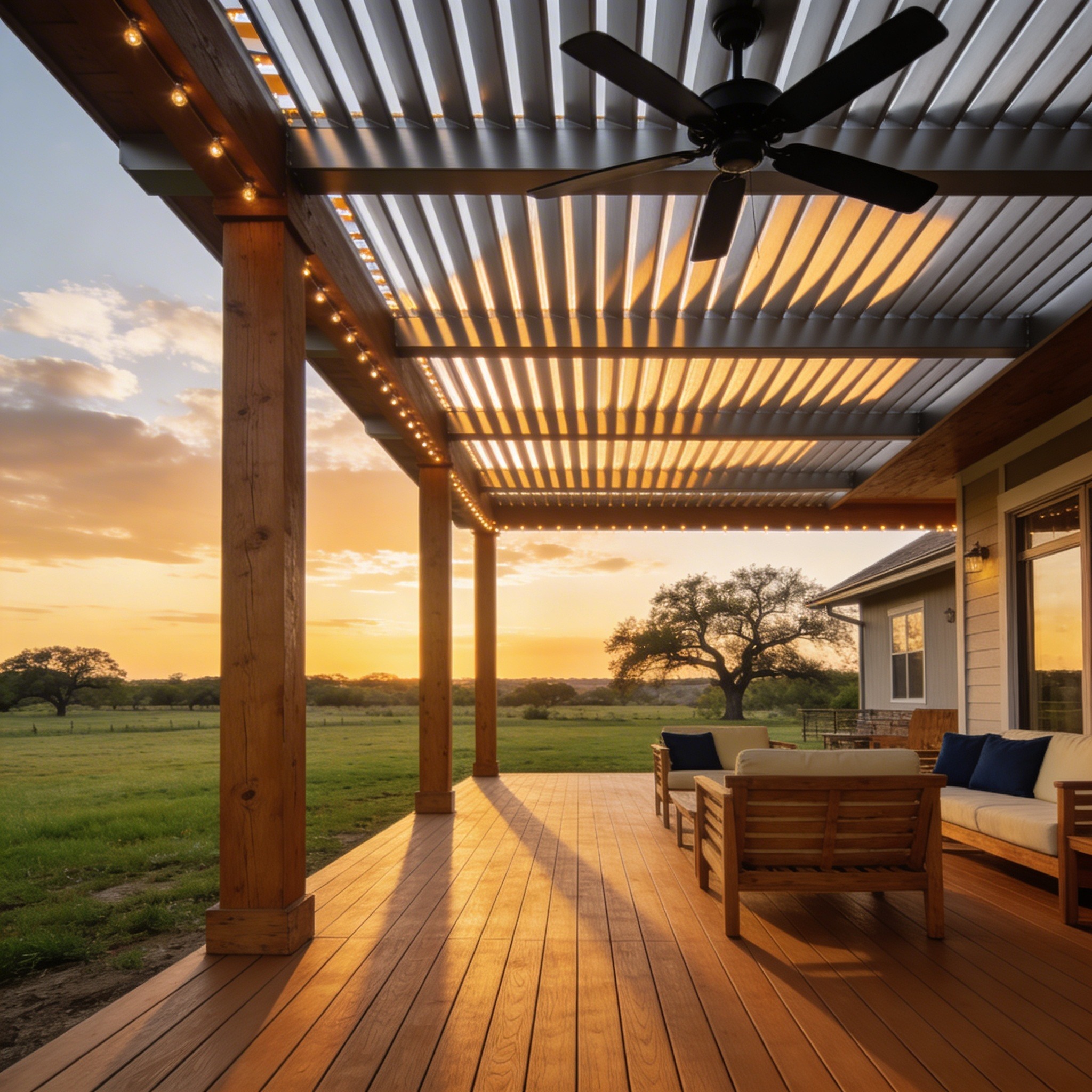
What Is a Pergola, and Why Does It Work So Well in North Texas?
A pergola is an open-roof outdoor structure supported by posts, typically featuring a series of cross-beams and open lattice work overhead. Unlike a solid patio cover or a screened room, a pergola filters light rather than blocking it completely — creating dappled shade, defining outdoor space, and giving climbing plants (or string lights, ceiling fans, or retractable shades) something to live on.
In North Texas, pergolas earn their keep because they solve the region’s specific outdoor problem: too much sun and heat for most of the year, but genuinely beautiful weather in spring and fall. A properly designed pergola with shade sails, louvered panels, or retractable canopies can extend your outdoor living season from 3 months to 7 or 8 months — a significant return on investment for any Fort Worth homeowner.
They also photograph beautifully, add measurable value to your home, and create the kind of outdoor entertaining space that makes your house the gathering place for family and friends.
How Much Does a Custom Pergola Cost in Fort Worth, TX?
Let’s get to the number everyone wants first. Custom pergola costs in the North Texas market vary widely based on size, material, and features — but here are realistic ranges Fort Worth homeowners should plan around in 2025–2026:
| Pergola Type | Typical Size | Estimated Cost Range |
|---|---|---|
| Freestanding, basic wood | 12×12 ft | $5,000–$10,000 |
| Attached, cedar or pressure treated | 16×20 ft | $10,000–$20,000 |
| Freestanding, composite/aluminum | 16×20 ft | $15,000–$30,000 |
| Custom luxury (louvered, motorized) | 20×24 ft | $30,000–$60,000+ |
| Full outdoor room with pergola | 20×30 ft | $50,000–$100,000+ |
These ranges reflect the complete installed cost — posts, footings, framing, decking or patio surface underneath, and basic electrical for lighting. They do not include optional features like outdoor kitchens, fire features, ceiling fans, retractable canopies, or outdoor audio.
What Drives Pergola Costs Up or Down?
Material selection is the single biggest cost variable. Cedar, pressure-treated pine, composite, aluminum, and vinyl all perform differently in Texas heat and all carry different price tags — more on this in the next section.
Size and height directly impact material costs and labor. A 10×10 pergola uses a fraction of the materials of a 20×24 structure, and taller posts (10–12 feet vs. standard 8-foot) add both material and labor costs.
Attachment type matters too. An attached pergola (connected to your home’s roofline or wall) requires flashing, ledger board installation, and structural coordination with your home’s existing framing. Freestanding structures are simpler to install but need their own footings.
Footing depth in Tarrant County is determined by frost depth requirements and soil conditions. The expansive clay soils throughout North Texas often require deeper or wider footings than other regions — your contractor should account for this in their bid.
Electrical and lighting add $1,500–$5,000+ depending on how many circuits, outlets, and fixtures you’re installing. Running electrical to a freestanding pergola in the middle of the yard requires trenching — budget accordingly.
Pergola Materials: Which One Is Right for North Texas?
This decision shapes everything: how your pergola looks, how it holds up to Texas weather, how much maintenance it demands, and what it ultimately costs over its lifetime. Here’s a clear-eyed comparison for Fort Worth homeowners:
Cedar and Redwood
Best for: Homeowners who love the natural wood aesthetic and are willing to maintain it.
Cedar and redwood are beautiful, naturally resistant to rot and insects, and relatively easy to work with. In North Texas’s climate, however, they require annual sealing or staining to maintain their appearance and structural integrity. Left untreated, cedar will gray and crack faster in the Texas sun than in cooler climates. A cedar pergola built correctly and maintained diligently can last 15–25 years. Skip the maintenance, and you’re looking at replacement much sooner.
Pressure-Treated Pine
Best for: Budget-conscious builds where longevity is more important than aesthetics.
Pressure-treated lumber is the workhorse of outdoor construction — more affordable than cedar, widely available, and highly rot-resistant. The downsides: it’s heavier, harder to finish with paint or stain, and has a more industrial look. For pergola beams and structural posts that will be partially hidden, PT lumber is a practical choice. For exposed decorative elements, most homeowners prefer cedar or composite alternatives.
Composite and PVC Decking Materials
Best for: Low-maintenance pergola decking surfaces and accent elements.
If your pergola sits over a composite deck, using matching composite materials for the pergola’s decking surface creates a cohesive, integrated look. Products like TimberTech by AZEK offer exceptional fade, stain, and moisture resistance — important qualities given North Texas rainfall patterns and UV intensity. As a TimberTech certified partner, Lawrence Construction Services supplies and installs these products at contractor pricing, giving our clients access to premium materials without the retail markup.
Aluminum and Steel
Best for: Maximum durability, modern aesthetics, and minimal maintenance.
Powder-coated aluminum pergola systems have become increasingly popular in the Fort Worth area for good reason: they don’t rot, warp, crack, or require painting. They handle Texas hail without denting. And modern aluminum pergola systems — especially louvered models — have a clean, architectural look that works beautifully with contemporary homes. The trade-off is cost: quality aluminum pergola systems run more than wood framing.
Vinyl/PVC Structural Members
Best for: Low-maintenance aesthetics that mimic painted wood.
Vinyl pergola systems look similar to painted wood from a distance and require essentially no maintenance. In Texas heat, however, vinyl can soften slightly and is more susceptible to impact damage than aluminum. For decorative elements and smaller structures, vinyl can work well. For primary structural posts and beams on larger pergolas, aluminum or wood is generally preferred.
Pergola Design Options: From Simple Shade to Full Outdoor Room
A pergola can be as simple or as sophisticated as your vision and budget allow. Here are the design options most commonly requested by Fort Worth-area homeowners:
Open-Beam Classic
The foundational pergola design — a series of parallel rafters over cross-beams, supported by four or more posts. Open to the sky, great for climbing plants and string lights, and provides partial shade from the angle of the sun. Simple, elegant, and the most budget-friendly custom option.
Louvered Roof Pergolas
One of the fastest-growing trends in North Texas outdoor living. Louvered pergolas feature motorized slats that open and close to control sunlight, ventilation, and rain protection. Fully open, they behave like a traditional pergola. Fully closed, they become a weatherproof outdoor room. Many systems also include integrated gutters to channel rainfall away from the structure. These are the most versatile — and most expensive — pergola option.
Shade Sail and Canopy Systems
A cost-effective middle ground: a traditional open pergola structure with retractable shade sails or canopy panels that stretch between the beams. You get the flexibility to open or close shade as needed without the cost of motorized louvers. Canopy fabrics rated for UV resistance and mildew resistance perform well in North Texas conditions.
Pergola with Attached Patio Cover
Many homeowners want part sun, part solid shade. A popular configuration is a pergola attached to the house on one side with a solid insulated patio cover section closest to the door (for deep shade over the seating area) transitioning to an open pergola frame extending further into the yard. This hybrid approach is highly functional for North Texas summers.
Full Outdoor Living Room Integration
This is where pergola design becomes outdoor architecture. When a custom pergola is designed in conjunction with an outdoor kitchen, built-in seating, fire features, and weatherproof lighting, it transforms into a full outdoor room. If you’re planning this level of project, read our guide on planning a multi-season outdoor kitchen in Azle — the design and budget considerations overlap significantly.
Pergola Placement: Getting the Orientation Right in North Texas
This is one of the most overlooked aspects of pergola design, and getting it wrong means you’ve built a beautiful structure that you can’t actually use during the hottest parts of the day.
In North Texas (roughly 32–33 degrees north latitude), the sun tracks from east to west, sitting in the southern sky. This means:
- South-facing pergolas receive the most direct sun exposure. An open-beam south-facing pergola provides excellent afternoon shade in summer when the sun is high, but may let in significant sun during morning hours.
- West-facing pergolas are the most challenging. Afternoon sun in Texas comes from the southwest and west — a west-facing pergola will bake in the late afternoon precisely when you want to use it most. Shade sails, louvered roofs, or strategic landscaping are essential for west-facing structures.
- East-facing pergolas receive morning sun and afternoon shade — often the most comfortable orientation for outdoor dining.
- North-facing pergolas receive the least direct sun and are naturally cooler, but may feel darker year-round.
A skilled pergola designer will evaluate your specific yard orientation, tree cover, existing structures, and how you plan to use the space before recommending placement.
Permits: Do You Need One for a Pergola in Fort Worth / Tarrant County?
Yes — in most cases. Here’s what North Texas homeowners need to know:
City of Fort Worth: Pergolas attached to a home generally require a building permit. Freestanding pergolas may require a permit depending on size (structures over a certain square footage threshold trigger permit requirements). Electrical work always requires a separate electrical permit.
City of Azle: Similar permit requirements apply. Attached structures connecting to the home’s structure require a building permit. Contact the City of Azle Building Department to confirm current thresholds.
Tarrant County (unincorporated areas): As with most construction in unincorporated Tarrant County, residential building codes are not enforced at the county level. However, HOA deed restrictions may impose their own requirements regarding structure size, placement, and materials.
HOA Considerations: Many neighborhoods in the Fort Worth area require HOA architectural review board approval before beginning any backyard structure. Approval timelines can run 30–60 days, so plan this into your project schedule.
A qualified contractor will pull all required permits on your behalf and ensure inspections are completed correctly. This protects your investment and ensures your homeowner’s insurance covers the structure.
How a Custom Pergola Integrates With Your Full Outdoor Living Space
A pergola rarely lives in isolation — it’s almost always part of a larger outdoor living vision. At Lawrence Construction Services, we approach pergola projects as part of your complete outdoor living space design, which means thinking about how the pergola relates to your deck or patio surface, your views from inside the house, traffic flow in and out of the structure, electrical needs for current and future amenities, and how landscaping and lighting will frame the finished project.
The best outdoor living spaces in North Texas feel intentional — like they were always there. That integration takes planning and an experienced eye for how indoor and outdoor spaces work together.
You can see examples of completed outdoor projects — pergolas, decks, and full outdoor living spaces — in the Lawrence Construction Services project gallery.
How to Choose the Right Pergola Contractor in Fort Worth
The pergola market in North Texas includes a wide range of contractors, from handymen and landscapers doing pergolas as a side job to full-service custom builders who design and build outdoor structures as a primary specialty. Here’s how to evaluate your options:
Verify they pull permits. Any contractor who suggests you skip the permit process is putting you at legal, financial, and safety risk. Permits protect you — not the contractor.
Ask to see completed projects in person. Photos are a starting point. The ability to visit a completed project or get references from real local clients is much more valuable.
Understand what’s included in the bid. A low-priced bid that excludes footings, electrical, or finish work can end up more expensive than a comprehensive quote. Get line-item detail.
Ask about material warranties. A cedar pergola and a TimberTech composite deck system have dramatically different warranty profiles. Make sure your contractor can articulate what’s covered and for how long.
Evaluate their design process. Custom pergolas should be designed around your specific yard, your home’s architecture, and your lifestyle. A contractor who jumps straight to a standard plan without understanding your space may not deliver the result you’re imagining.
Call us at (817) 612-7010 or start a project online — we serve Fort Worth, Azle, and the entire 30-mile North Texas area.
8 Frequently Asked Questions About Custom Pergolas in North Texas
How much does a custom pergola cost in Fort Worth, TX?
A custom-built pergola in the Fort Worth and Tarrant County area typically costs between $8,000 and $40,000+, depending on size, material, and features. A basic attached cedar or pressure-treated pergola runs $8,000–$18,000 for a mid-size structure. Composite or aluminum pergolas with louvered roofs and integrated lighting can reach $30,000–$60,000 or more for larger outdoor room configurations. These are installed costs including footings, framing, and basic electrical. Optional features like outdoor kitchens, ceiling fans, fire features, and motorized shade systems are priced separately.
What is the best material for a pergola in Texas?
For North Texas specifically, the best pergola materials balance durability against the Texas climate with your desired maintenance level. Cedar offers natural beauty but requires annual sealing. Powder-coated aluminum is the most durable and lowest-maintenance option, ideal for families who want a set-it-and-forget-it structure. Composite materials excel for decking surfaces and accent elements. Many Fort Worth homeowners choose a hybrid approach — aluminum or steel structural posts with cedar or composite decorative beams — to balance cost, aesthetics, and durability.
Do I need a permit to build a pergola in Fort Worth?
In most cases, yes. Attached pergolas connected to your home generally require a building permit from the City of Fort Worth or your local municipality. Freestanding pergolas may also require permits depending on size. Electrical work always requires a separate permit. HOA neighborhoods require architectural review board approval regardless of municipal requirements. Working with a licensed contractor who handles permit applications protects your investment and ensures compliance.
How long does it take to build a custom pergola?
Once permits are approved, a custom pergola in North Texas typically takes 1 to 3 weeks to construct, depending on size and complexity. Simple attached structures may take 5–7 days of active construction. Larger pergolas with integrated outdoor kitchens, electrical systems, and custom features can run 3–6 weeks for the complete project. The permitting process itself — which runs before construction begins — can take 2–6 weeks depending on the municipality and time of year.
How can I keep my pergola cool in the Texas summer heat?
Several strategies significantly improve pergola comfort during North Texas summers. Louvered roof systems allow you to control shade and airflow with a remote. Shade sails or retractable canopies block direct sun while maintaining some breeze. Ceiling fans rated for outdoor wet or damp locations create meaningful airflow even on still days. Misting systems lower ambient temperature by 10–20 degrees in dry conditions. Strategic placement avoiding west-facing sun exposure is the most cost-effective approach — get the orientation right during the design phase and you’ll be far more comfortable from day one.
What is the difference between a pergola and a patio cover?
A pergola has an open or partially open overhead structure — cross-beams, lattice, or louvered slats — that filters light rather than blocking it entirely. A patio cover (also called a covered patio or shade structure) has a solid or insulated roof panel that blocks sun and rain completely, functioning more like an outdoor room with a ceiling. Pergolas provide partial shade and an open-air feel. Patio covers provide complete weather protection. Many North Texas homes benefit from a combination of both, with a solid insulated cover closest to the house and an open pergola frame extending further into the yard.
How much value does a pergola add to a home in Texas?
A well-designed, professionally built pergola typically adds $5,000–$15,000 or more to a home’s appraised value in North Texas, though the return varies significantly by market and installation quality. Real estate data consistently shows that functional outdoor living spaces — patios, decks, covered areas, and pergolas — are among the top features buyers look for in Texas markets, where outdoor entertaining is a year-round aspiration. A pergola that’s part of a complete outdoor living space (deck, kitchen, lighting) tends to add more value than a standalone structure.
Can a pergola be attached to any type of home?
Most homes can accommodate an attached pergola, but the method of attachment depends on your home’s exterior material and framing. Wood-frame homes with wood siding allow for standard ledger board attachment with lag bolts into the rim joist. Brick, stucco, or stone exteriors require masonry anchors and additional waterproofing at the attachment point. Homes with EIFS (exterior insulation finishing system) or certain siding types require specialized flashing to prevent moisture intrusion. A qualified contractor will assess your home’s exterior and propose the appropriate attachment method — never accept an attached pergola installation without proper flashing and weatherproofing.
Most homes can accommodate an attached pergola, but the method of attachment depends on your home’s exterior material and framing. Wood-frame homes with wood siding allow for standard ledger board attachment with lag bolts into the rim joist. Brick, stucco, or stone exteriors require masonry anchors and additional waterproofing at the attachment point. Homes with EIFS (exterior insulation finishing system) or certain siding types require specialized flashing to prevent moisture intrusion. A qualified contractor will assess your home’s exterior and propose the appropriate attachment method — never accept an attached pergola installation without proper flashing and weatherproofing.